
People often overestimate dramatic moments.
A new year.
A Monday.
A birthday.
A motivational video watched with unreasonable confidence at 11:47 PM.
We imagine life changing all at once.
It almost never does.
Life usually changes quietly.
One repeated action at a time.
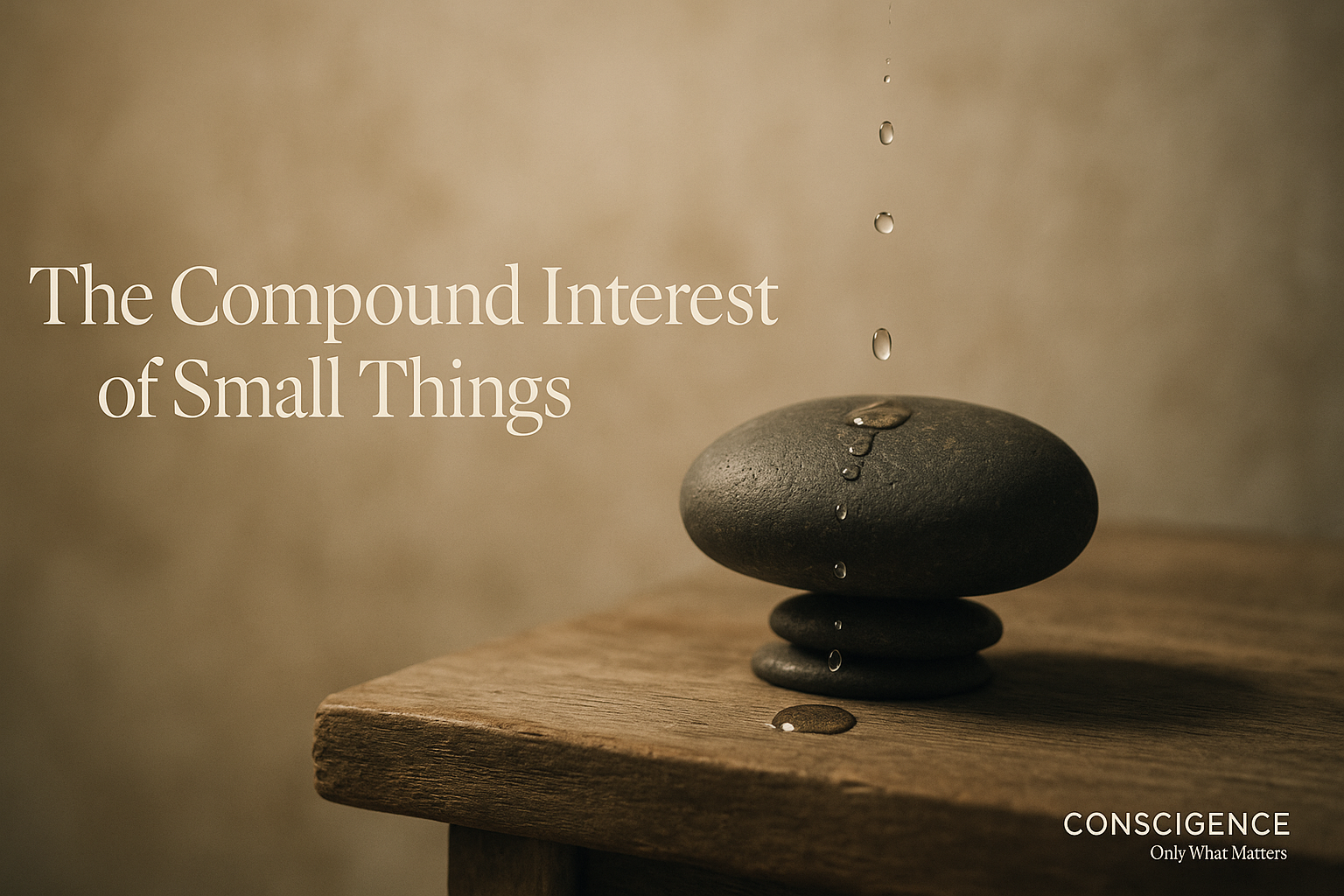
Imagine placing a single drop of water on a rock.
Nothing happens.
Place another.
Still nothing.
A thousand more.
The rock remains unimpressed.
Keep going long enough...
Even stone begins to negotiate.
Habits work the same way.
They're unimpressive individually.
Remarkable collectively.
This is why good habits feel unrewarding in the beginning.
One workout doesn't transform your body.
One page doesn't make you wise.
One healthy meal doesn't reverse years of poor nutrition.
The investment arrives immediately.
The return doesn't.
Which is exactly why most people quit before compound interest has a chance to introduce itself.
Bad habits follow the same mathematics.
One skipped workout feels harmless.
One unnecessary purchase feels affordable.
One hour of mindless scrolling feels deserved.
Individually...
They're almost invisible.
Repeated daily...
They're excellent architects.
The frightening part is that both good and bad habits are incredibly patient.
Neither demands immediate results.
Both simply wait.
Motivation is often celebrated.
Consistency is often ignored.
Yet motivation is a visitor.
Consistency quietly moves in and starts paying the bills.
The people we admire rarely possess extraordinary discipline every day.
They simply reduce the number of decisions.
They write because they always write.
They walk because they always walk.
They read because that's simply what evenings look like.
Eventually, habits stop feeling like effort.
They begin feeling like identity.
Perhaps that's why the smallest habits deserve the greatest respect.
They rarely look important today.
They become impossible to ignore five years later.
The question isn't whether today's action changes your life.
It probably won't.
The better question is:
'If I repeated this for the next thousand days... would I like where it leads?'
Because habits don't ask for perfection.
They ask for another vote tomorrow.
And another after that.
Life quietly keeps counting.

Discussion
0 voices in conversation